

EN | English


Quite often when I highlight a private, typically early-stage biotech company for these annual awards, I’m asked what I look for in a company. How do you define an Endpoints 11 company?
There’s a simple enough answer. First, I look for big ideas among the private biotechs which qualify for review, a swing for the fences. I’m drawn to people who are willing to gamble a chunk of their lives on new drug ideas, and in that regard, the stakes here are huge. Drug development is long and hard, and you could easily be wagering 10 or more years of your life on something. So go big or go home if you aren’t planning to do something transformative.
I want a team directing these projects that have the talent, vigor and knowhow to make it happen. Track records are key and earlier failures can be a big plus — depending on how that played out.
People are always more important than money. That’s a mantra of mine that always earns quick nods in any biotech group. But making sure that a company has enough lucre to make it through to proof of concept, and beyond, is also key to the selection process.
Still, you’ll find companies below that raised a few million to get started, and biotechs that appear to have found the key to Fort Knox. So it’s variable.
And then there’s the noise factor. I want to choose companies that can earn widespread recognition for success — or make a hell of a noise if they fail. None of these companies below will slink off to an anonymous midnight burial if they fall short of victory. They’ll make a noise heard throughout the global industry, and we can all learn from it.
This year, with a pandemic raging around the world, I wanted to focus more on culture than particular assets. Each of these biotechs is sorting out the R&D work, but I want to let the execs reflect more on the most important points of starting a company than the specific program goals in mind. Building companies these days takes some newfound ingenuity, and it’s important to share these points with everyone.
There are some other trends you’ll see reflected in the stories below. The intersection of biotech and Big Pharma is taking on a different tone at times, with an eye to assembling large networks of experts to tackle complex problems. And the inflow of billions of dollars of fresh investment capital allows for a new breed of startup conspiring to sire transformative therapies. That’s not cheap, and success is not guaranteed. But it is always fascinating.
Let me sum up here by noting that the biggest healthcare crisis in 100 years has helped make biotech the place to be, fortunately for all of us. These companies aren’t squandering the opportunity. And that deserves a special shout out all on its own. — John Carroll
“Everyone has to be aligned”
CEO: Kartik Ramamoorthi
Co-founder and CSO: Stephanie Tagliatela
Based: South San Francisco
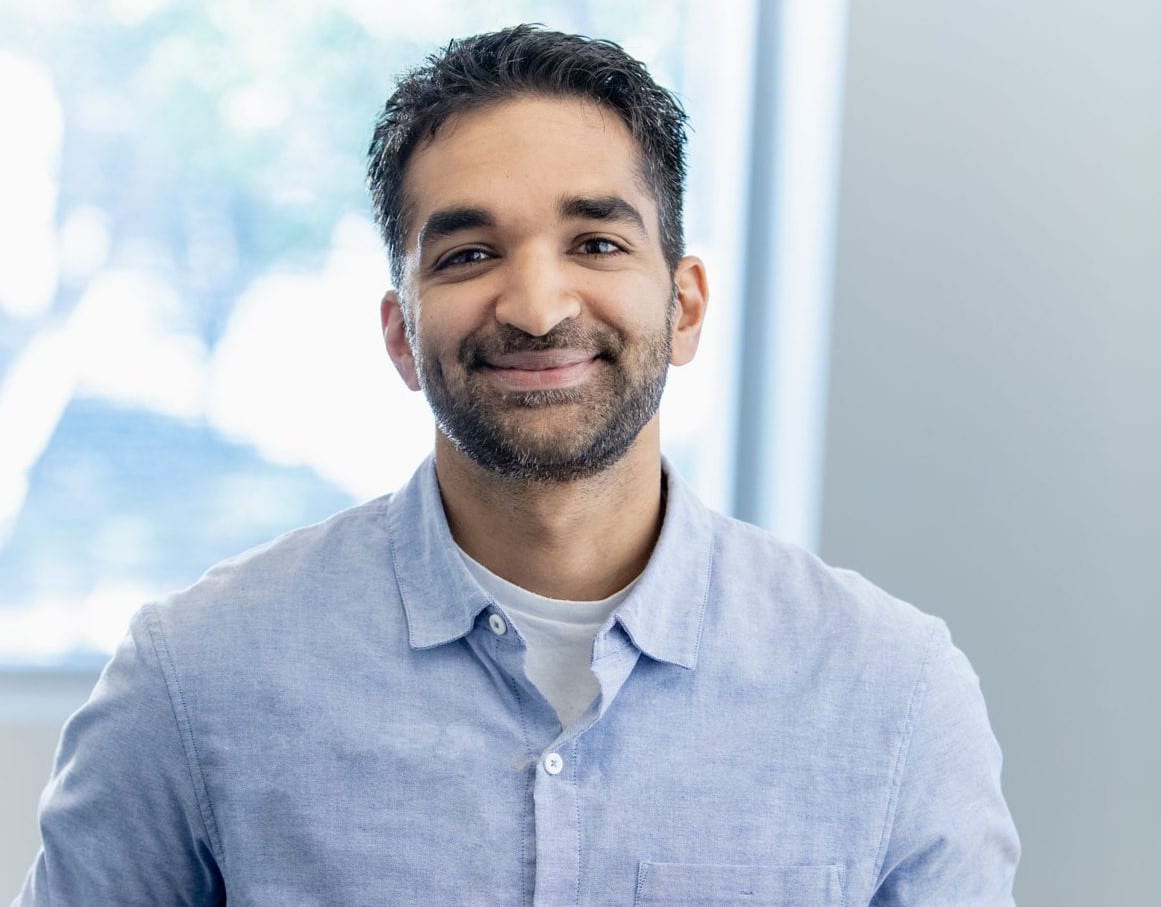
The scoop: As the first gene therapies began to hit the market, it became more than apparent that gen-2 would focus on knocking down the barriers that set up boundary lines on the tech. The idea driving Encoded’s team revolves around the destructive role that mutations in the SCN1A gene have on GABAergic neurons, which in turn are a likely driver of SCN1A-positive Dravet syndrome.
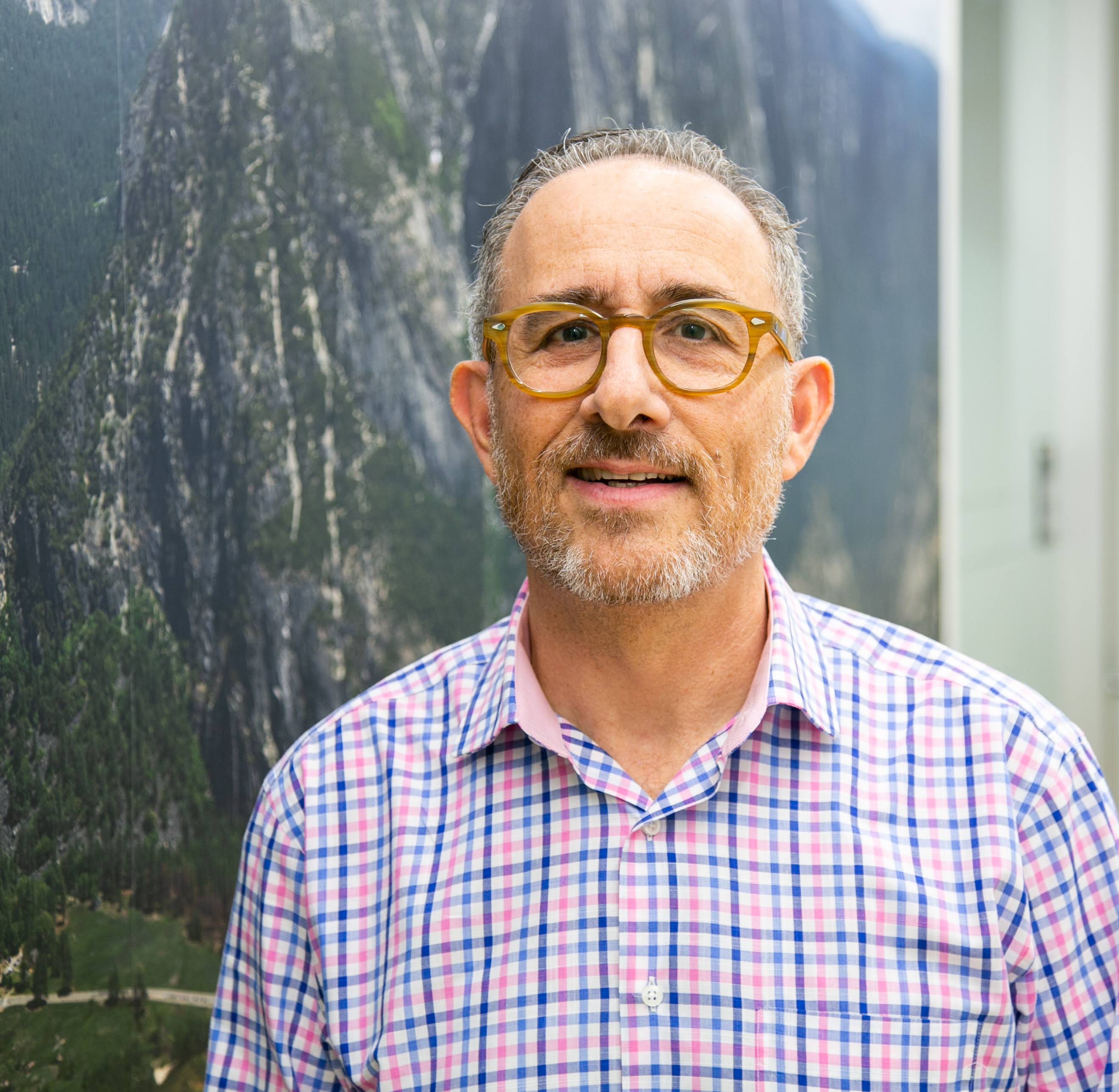
Regular AAV vectors are too small to carry corrective copies of SCN1A genes, so Encoded’s initial hurdle was identifying the regulatory elements or sequences that control SCN1A and targeting those sequences with a protein that slips into the AAV vessel for delivery — which they’ve been doing in mice and primates. Unlock this problem, and you open the door to a portfolio of therapies. They’ve gained the support of an impressive group of investors, and David Schenkein at GV has stepped in to help godfather this biotech — taking a mentoring role after ushering Agios through the whole discovery and development journey through to commercialization.
That kind of guidance is a particularly valuable commodity for young companies like Encoded, a source of expertise as well as validation that they’re doing something smart. CEO Kartik Ramamoorthi, who you may recall was featured in our under-40 special last spring, knows that better than anyone. I asked him about his background, helping launch Voyager and step in on the creation of the now booming gene therapy field.
"I was academic through and through. The experience with Voyager and Third Rock was serendipitous. I happened to be working in a field that they were interested in, I had the scientific background and I decided to give the opportunity a shot just to see what it would be like to do science in a different context and a different environment and I just fell in love with it."
The introduction to a gene therapy biotech startup also demonstrated to Ramamoorthi the importance of alignment — where everyone involved in an organization identifies with a common goal, like helping patients at the end of the day.
“Everyone has to be aligned,” says the CEO. And the bigger goal at Encoded is to go beyond the pioneers in the field like Audentes and AveXis — where they gained proof-of-concept and then got bought out — but go all the way and take it “end to end,” from early research to commercialization.
Another important lesson at Voyager was the importance of people, recruiting a group of all-stars to build a great company.
"It was very concentrated but kind of an amazing training set to have at the stage I was at and it really catapulted me into realizing here are the ingredients I needed to pull together to make Encoded happen."
There’s definitely technological needs in gene therapy but more generally there are so many bottlenecks where if you create approaches those are all opportunities to unlock new indications. If we could find investors who bought into that notion there’s the potential to build a company that could to go from the earliest stages of research all the way to commercialization and we can build that in a staged and step-wise manner.
Getting the first buy-ins from well connected investors was key.
"Encoded started because I met an individual named Bob More, who’s a former VC, he was at the Gates Foundation when I met him. I was interviewing for a job there, pitched the idea of Encoded to Bob and was like wow, you should start this company. Don’t take this job. And he was the first check into the company. He was the first $100,000 into the company."
More opened the door to Illumina, which allowed the founders to build the tech, and they went on to Venrock, Matrix Capital and then Schenkein and others. Schenkein in particular was enamored by their “deep science” approach to mastering the hurdle. And he clearly plays a big role at Encoded, says the CEO.
"I’m young, Stephanie (Tagliatela) is young, but we’re surrounded by people who have really done this before and that’s a really potent combination. We represent the next generation of gene therapy with folks that may be some of the more experienced people in gene therapy and that’s a cool combination to get to."
“Making a dent in the universe”
CEO: Daphne Koller
CTO: Ajamete “Aj” Kaykas
Based: South San Francisco
The scoop: From the outset back in early 2018, Daphne Koller had a very clear idea of what was wrong with drug R&D and what needed to happen to fix it.
In her view, much of the tens of billions of dollars being spent on research each year was being squandered. Failure rates are sky high, no matter how you calculate that, and the cost of failure was being passed on to the relatively small group of increasingly specialized drugs entering the market each year.
That’s not going to work in the long run.
What could work, said the machine learning expert and ex-Stanford star, was taking the increasingly sophisticated machine learning tech available and pointing it at discovery with the help of a talented team of researchers. And unlike many of the others interested in AI, she also noted that success here would depend on being able to generate the kind of data needed to properly do the discovery work. Data that simply didn’t exist.
Pursuing deals with the likes of Gilead, she not only went about the hard work of pulling those data sets together, but also jumped into the biology side for the first time, creating a wet lab and building a staff of 80 that could bridge ML with biology and craft a pipeline of its own. Koller is also acutely aware of the fact that she’s in a field where perceptions can be warped by relentless hype.
From our conversation:
"Machine learning is a remarkable technology with tremendous potential but it’s not the silver bullet. I think there’s tremendous amounts of damage being done by people who over hype this, as, ‘Oh, we’re going to have 50 drugs in 3 years and it’s going to take us 6 months to go from idea to approval.’ It’s not going to happen. And by saying that it’s devaluing the very solid and important work that a lot of us are trying to do and actually getting the technology to be useful in solving a very challenging problem.
In terms of the data quality…those of us who have been working in machine learning for a very long time know that given the option between a really great data set with a relatively straightforward machine learning algorithm versus a crappy data set with the best machine learning algorithm, I would take A any day of the week over B. The best of both worlds of course is even better but investing tremendous amounts of time in having the fanciest GAN convolutional neural network blah de blah on a crappy data set is actually going to get you more damage than you realize because it’s so likely to overfit to artifacts in the data that you don’t even realize are there.
Getting machine learning data science and experimental life science folks sitting together allows you to do tests a different way, delivering different data. It’s not about the best answers sometimes so much as the best questions."
Proving they are on the right track still comes down to the same basic challenge faced by everyone in drug development. You have to put drugs into people to see if they work as you expect they should, says Koller. That’s a multiyear process that can’t be wildly compressed. But you can hit important milestones along the way.
"I’ve looked for instance at cellular phenotypes and I’ve built a model that aligns those with human clinical outcome: Can I take a group of genetic backgrounds that I’ve never seen before and predict clinical outcomes for those patients? That is a confidence building measure. It says I built a disease model that is actually predictive of what we see in humans. By the way, animal models, they don’t even get asked that question in a lot of cases, which I find rather shocking."
But then, there’s a reason why failure rates moving from animals into humans is sky high.
Much of what insitro is trying to accomplish calls for mixing machine learning specialists with the R&D people. During these pandemic days, no one is mixing much face to face. But there are other ways to achieve the social cohesion any biotech needs to succeed.
"Some things in terms of social interaction have actually worked pretty well. So for instance we now have a weekly ‘no hands’ instead of a weekly ‘all hands,’ which is all on Zoom and some fun activities have developed around that that I think are actually in some ways a great group building activity. So we have for instance a Slack channel that runs in parallel to the no hands where people post little jokes and giffies and things like that about things being said in the actual session. And it creates sort of a kind a social interaction around the event. That’s not something you can do if everyone is sitting around the room and talking to each other…so I think that works really well"
What she couldn’t afford was seeing a chasm develop between the lab people and the non-lab people. So Koller encouraged randomized coffee chats that involved different groups. And she also relies on a group of 45 West Coast biotech CEOs now meeting monthly on Zoom to exchange ideas.
"The early days were very challenging, I won’t lie. I was also actually new to the space…To build something from scratch you need a network, you need to be connected to people that you can recruit, you need to ask advice. When I came into this I had none of that. So it was an incredibly challenging thing to just start from a blank slate in a space where you were a newcomer and figure out even how to go about building a wet lab that I had never built before. I was fortunate in having good investors and good board members who were helpful in making some connections and helping me work through some of the early decisions, and most importantly some of the early recruiting. Once you start having a team around you, it’s a lot easier to expand from there because they have their networks and then you also have someone to run ideas by.
The thing I found the most challenging was when I had to make all these complicated decisions in the echo chamber of my own head, without having someone to actually bounce ideas off of.
I won’t say it was easy, but the important things in life are never easy."
Paraphrasing Steve Jobs, Koller adds: “Our goal in life is to make a dent in the universe, and you don’t get to do that by just taking the easy road.”
“Employee #5 is out to craft his own company after decades in R&D”
CEO: Norbert Bischofberger
CMO: Jorge DiMartino
Based: Cambridge, MA
The scoop: After Norbert Bischofberger left Gilead following a remarkable stretch running R&D — during which they rolled out a string of blockbusters — he went in search of new challenges at a time many people are working on their retirement budgets. He found it at Kronos Bio, which he joined as employee #5.
Today, Kronos has close to 100 staffers, with plans to add more as their in-house pipeline steers toward the clinic and an in-licensed drug brought in from his old colleagues at Gilead is being prepped for a Phase III AML study. And Bischofberger has tapped some of the most influential players in biotech investing to bring the total raise so far to $278 million.
Bischofberger is blessed by some of the best contacts in venture capitalism. Most importantly in that bunch is Arie Belldegrun, who helped launch the company and recruited Bischofberger to run it.
The last time I talked to the biotech CEO freshman, it was clear to me and anyone else with an ounce of experience in the field that he was prepping an IPO. The company recently in-licensed late-stage candidates from his old colleagues at Gilead. Bischofberger jumped from Gilead with one of the best reps in the R&D side of the business, and he was clearly pleased that he was liked and respected well enough by the new crew running Gilead to be able to go back and work out the licensing deal.
Bischofberger and Belldegrun — who founded Kite and reaped a fortune from its sale to Gilead — are completely aligned on one thing: They both look for the product, the drug, that can bring in investors and make a company. And the key to making that all happen is having the right team to lead the charge. So it’s no surprise finding a Celgene vet, Jorge DiMartino, as CMO, or seeing Bischofberger recruit Yasir Al-Wakeel (another Endpoints under-40 alum) as the CFO.
In a certain respect, it all makes for a textbook case for pivoting from private startup to public player: building the team, working on the platform, and in-licensing products with a relatively high percentage shot at an approval.
The S-1 landed just days ago, putting Bischofberger in a formal quiet period. But I nabbed this quote from our first conversation about his leap into an entrepreneurial role, which helps illustrate the enthusiasm he brings to the task.
“I want to do it again,” said a cheerful Bischofberger in the spring of 2018. “I’m 62, I feel like 42 and behave like I’m 22… I’ve done it and seen it all, now I want to apply it to my own ideas.”
So now there’s the hard work of doing the late-stage program and hunting an FDA approval while building the early-stage pipeline and leaping into the clinic. But Bischofberger knows every step of that process. In back of everything at Kronos is a CEO who achieved a rep as one of the most effective execs in R&D. He knows exactly what he’s doing. But now he’s doing it at his own company.
“In pursuit of the magic cell”
Executive chairman: Rick Klausner
CEO: Liz Homans
Head of R&D: Stan Riddell
Based: South San Francisco; Seattle
The scoop: Rick Klausner made his rep running the NCI. He went on to help found Juno (bought out) and Grail (being bought out). Now he’s tapping a multitude of connections in the Bay Area and beyond to build Lyell into a central player in the cell therapy 2.0 movement.
Not only is the Lyell team busily advancing its own therapies and partnering with old friends and colleagues like Hal Barron at GSK, Klausner has been investing in a network of startups himself. After raising more than $600 million in a short period, Klausner knows he’s going to need lots of add-ins on the tech side. He’s getting them, and redefining the biotech buildout model in the process.
Klausner recently switched roles, taking on the executive chairman’s position while Liz Homans, a Genentech vet with deep R&D experience, took over the day-to-day as CEO. They see themselves working as a team, both focused on their overarching vision for cell therapy 2.0 as well as the practical matter of building an in-house pipeline and filing INDs.
Here’s part of what Klausner had to say recently:
"In many ways this is a bit of a daughter of Juno. Honestly there were 2 things that in some sense drove me crazy in founding Juno and being part of this for a long time. And that is why we were able to make all this progress in hematologic malignancies but solid tumors for adoptive cell therapy was so difficult even though we know we can do this.
I think Steven Rosenberg has shown we can achieve — potentially — cures of occasional patients with solid tumors with T cell therapy, but it’s totally unpredictable. The whole time at Juno I was always asking the R&D team: Explain to me why you need more than 2 cells? Why? The cells proliferate 10 to the 6th, 10 to the 7th fold, and yet there’s this bizarre dose response where if you’re getting an effect with 20 million cells and you try to go to 10 million cells, nothing happens and that doesn’t make sense.
I realized we don’t know what are the effective cells. We give this collection of cells, and it’s a complex collection of cells, the T cell lineage is extremely complex and still not totally worked out. And so I personally became obsessed with the cell biologist’s view of this immunologic and cancer problem. How do we identify these, I refer to them as the precluditive magic cells that have all the potential to effectively eradicate tumors and then how do we keep them active in the presence of what a solid tumor throws at them?"
"
One of the key foundational experiments on this was done by Stan Riddell — now the head of R&D at Lyell — when he was at Juno. He identified the different fates of these cells as they went after hematological malignancies and solid tumors, tracking the cells as they were shunted into what they identified as the exhaustion pathway that precluded them from working.
“Patients are telling us, this is the block, how can we prevent exhaustion?”
Then Crystal Mackall, one of the Lyell co-founders, “worked out, out of the blue” the role the AP-1 transcription factor pathway played in preventing cells from going down the exhaustion pathway.
And that was really the beginning. “We have a path — making sure that cells that can eradicate a tumor stay that way. The other part was this search for the magic cells. What is the minimal cell prep that has all the activity and can be selected for activity?” Why do cell preps occasionally work, they asked. One observation was that the younger they were the better, but it was a broad correlation. So they explored the characteristics of cells that have potency for solid tumors.
Nick Restifo, recruited to Lyell, “has been pursuing epigenetic reprogramming of cells, that make them spectacularly suited to kill solid tumors.”
In “very difficult” animal models, the dose required for epigenetic reprogrammed cells goes down thousands of fold. “Think about cost of therapy,” says Klausner. Most cells we give either don’t do anything or are negative. In their vision, those cells will be eliminated.
"That’s Lyell. Lyell is the cell biologic approach to identify and helping create and program the cells to be optimally functional for the potential of getting to and eradicating solid tumors and then stay that way by being resistant to exhaustion."
It’s the complete opposite of a receptor focused approach, says Klausner, whether TCRs, TILs, etc. Their goal is to solve the cell biologic problem and then partner to create a menu of applying cell biologic controls to a variety of approaches to specificity. Hence the deals they struck for GSK covering targets like NY-ESO, Eureka with the merger of CARs and TCRs, Pact and so on. And then pursuing in-house programs as well.
That’s the scientific story at Lyell, but there’s also a development story here as well, which Homans is happy to spell out.
"I think Rick and I are a great partnership for particularly this reason. We have built not just a carefully curated scientific portfolio, but we have been able to operationally establish a high functioning company. I think it’s to our credit that just 2 years in we actually have a really rich and robust research portfolio that’s produced data that is leading us to potentially multiple INDs over the next 18 to 24 months. So it’s not just the building of the company, it’s the building of the capabilities that are going to progress us towards clinical trials and ultimately to therapies for patients. I think a key element to that is a really excellent senior leadership team that we’ve hired, and it’s a great team and they’ve been executing practically since day one."
“It’s not just a cool dream”
CEO: Ivan Dimov
Co-founder and CSO: Nate Fernhoff
Co-founder: Jeroen Bekaert
Based: Menlo Park, CA
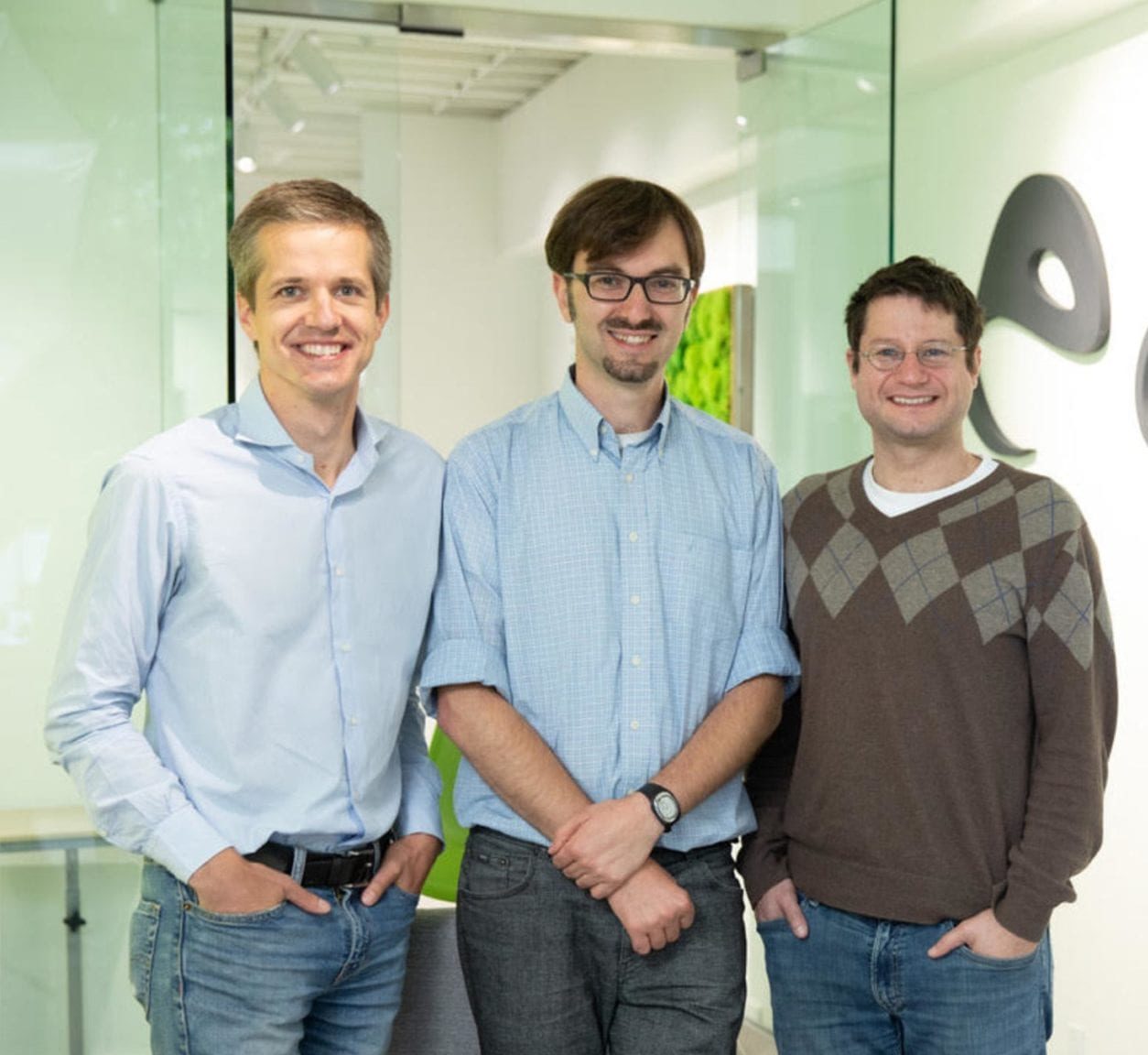
The scoop: The 3 founders at Orca stumbled across the ruins of an old dream of Irv Weissman’s when they were studying at Stanford. Weissman had been doing pioneering work on cell purification back in the ’90s, but a variety of technological hurdles had scuttled the work that Novartis undertook in buying his spinout. Now, with better tech and an introduction to some of the industry’s top insiders, the young entrepreneurs took a very close look, decided that there was some very cool progress to make, and jumped.
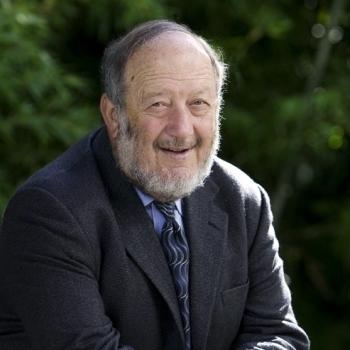
They just raised $192 million to gather the clinical data they’ll need to make a case that they can revolutionize bone marrow transplants, for starters, with a high precision cell therapy. And Weissman (the academic star at Stanford who scored big on Forty Seven) along with ex-Novartis CEO Joe Jimenez (with the Big Pharma perspective on CAR-T) and the ubiquitous Bay Area biotech leader Rick Klausner at Lyell (ex-NCI chief in search of cell therapy 2.0) have all agreed to help godfather the upstart as advisors.
I talked with CEO Ivan Dimov about the circumstances that led him to doing a biotech startup.
"My background is more in the science and engineering side and I’ve been a little disappointed, especially when you look at it from an academic sense, where you really uncover some very exciting ideas, very exciting thoughts. You do a lot of work, you base your entire career on it, and eventually it becomes a publication and it kind of stops there. And that was highly disappointing, especially if you are very passionate about something.
So very early in my career I realized that if you really need to go all the way you needed a separate kind of medium for that. You know, society has sort of evolved in this way, that the best tool for delivering that beyond the basic idea and the publication is through this entity like a startup. That has always been a goal for me in life."
"
So he and his partners were primed and ready to go after completing a deep dive into the work Weissman had done on cells — just as cell and gene therapy R&D is booming as entrepreneurs and scientists blaze a trail toward gen-2 products. Weissman was deeply disappointed by Novartis’ decision to abandon the work. The Orca founder felt it was a bit mystifying. But he didn’t doubt the opportunity after taking time to see how they could remake the work in light of tech advances — which commanded the attention of some major league players in the cell therapy field.
"It almost seems unethical from a human perspective because some of the initial results suggest highly curative effects and the whole thing was shut down for over a decade because of some of these challenges of practically implementing these things and deploying them. So that was sort of the key driver for us to get started. And we always knew we wanted to fulfill that dream all the way through and not really stop at a certain stage and leave it for someone else.
Six years into the project it had grown quite a bit. A lot of the risks on the people had seemed to be removed…It had come to this stage of maturity where you felt that the academic environment was now actually slowing you down and hampering your progress and at that point in time it felt really ready for making a leap."
And experimenting with the tech made them more confident.
"When we de-risked a lot of those pieces and knew that it was actually working and the fundamentals were all in place and we looked at this and said, ‘This could be really game-changing because it really changed all the parameters and the limitations.’ That’s kind of the point where, OK, this really can be a company because it’s not just a cool dream, it’s somewhat of a reality already."
“The 5-platform play: You have to really invest in all 5 of those areas to really make it great”
CEO: Steve Harr
Head of R&D: Sunil Agarwal
Based: Seattle, South San Francisco and Cambridge
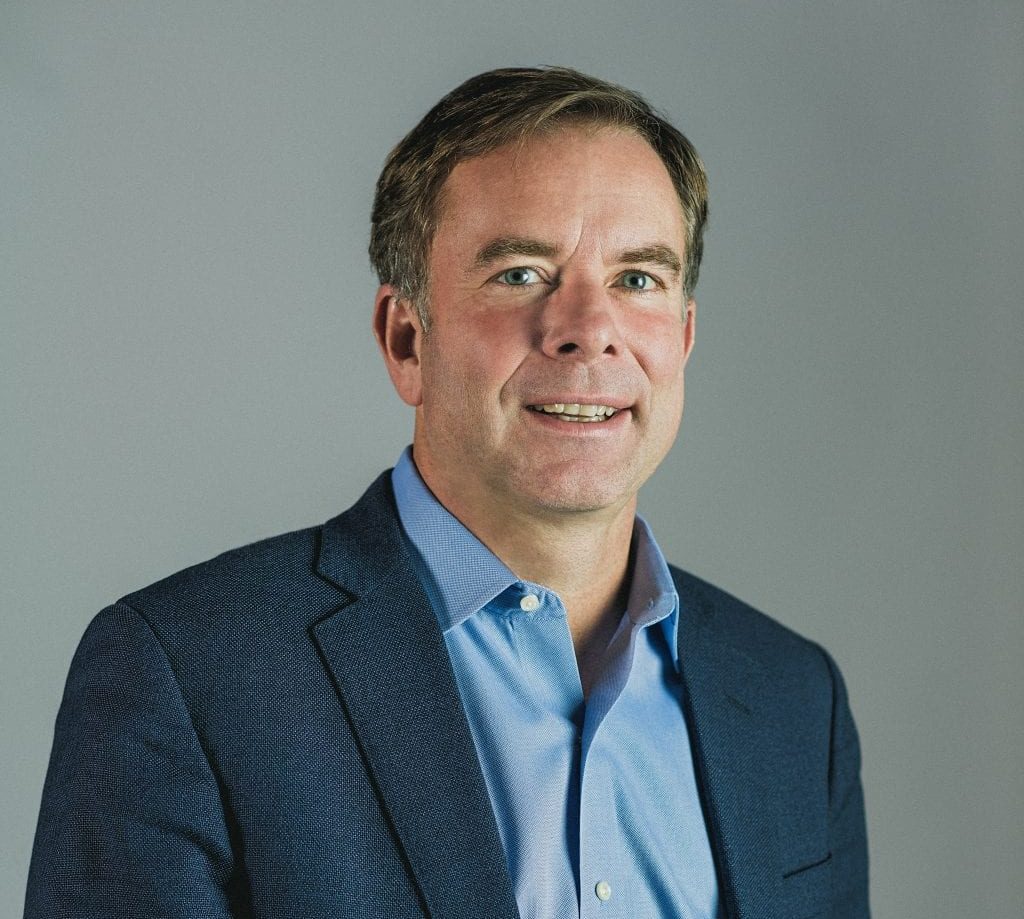
The scoop: You’ll find all kinds of business models in this year’s list of the Endpoints 11, ranging from new companies that got started on a shoestring to, well, Sana. With a leadership team captained by CEO Steve Harr and Chairman Hans Bishop of Juno fame and connections with some of the deepest pockets in biotech, they’ve attracted a world-class team of execs. And they have more than one technology in the portfolio.
Skyhawk Contact
Maura McCarthy
Head of Corporate Development
maura@skyhawktx.com
