

EN | English


With Bristol-Myers Squibb’s Celgene buyout all but complete, the BD teams are working in perfect synchrony now. The Celgene side is going back to Skyhawk, a darling of the crowd that set out to drug RNA, and they’re adding a suite of new programs that mesh perfectly with the new regime in charge.
Celgene is shelling out $80 million in a cash upfront to add oncology, immuno-oncology and autoimmune diseases to the initial roundup of neurological targets mapped early in Skyhawk’s existence.
Skyhawk CEO Bill Haney tends to keep large segments of the financials in his preclinical deals under wraps — standard for the big biopharmas he’s been working with. But he’s happy to confirm my own back-of-the-envelope math that he’s now garnered $350 million to $400 million in upfront payments to build the company — a significant sum for a company that has yet to try a drug on a human.
Milestones now lie somewhere north of $15 billion. And by any account, the roster of pacts he’s inked in the last 2 years put him at the top of the list of the most active dealmakers in the industry. That’s impressive for a documentary maker, entrepreneur and CEO of 2 biotechs — both of which have some landmark news to report today.
Haney’s other job is running Dragonfly, and today they’re making their first foray into human studies, with the launch of a Phase I study for their lead drug DF1001 in HER2 expressing solid tumors. This is the first of their TriNKET platform drugs to go into humans, and Vessey stepped up with $12 million for Celgene’s third option from Dragonfly.
So why was the biotech newcomer able to jump out in front on dealmaking?
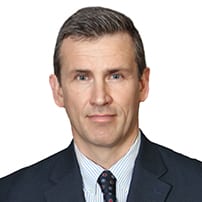
“There aren’t that many genuinely novel platforms,” Haney says about Skyhawk. His scientist friends and associates — a group that includes Tyler Jacks at MIT’s Koch Institute — haven’t hurt. And he likes to keep the values simple: Stay focused on patients, stay humble, don’t get ahead of yourself or the organization — with 55 staffers and around 100 FTEs around the world — in rolling out alliances.
Technically, both Bristol-Myers and Celgene have to continue to operate as independent entities. But this deal fell into Rupert Vessey’s domain, who will make the transition from Celgene to head of early- and mid-stage R&D at Bristol-Myers, where oncology, I-O and autoimmune diseases are core fields.
“We see Skyhawk’s platform as a key disruptive technology that will support the autoimmune, oncology and immuno-oncology pipelines of the company we are today, and the company we are planning to be,” said Vessey, in a prepared statement that makes the seamless nature of the alliance apparent.
Skyhawk Contact
Maura McCarthy
Head of Corporate Development
maura@skyhawktx.com
